
PayLater Credit Limit Optimization
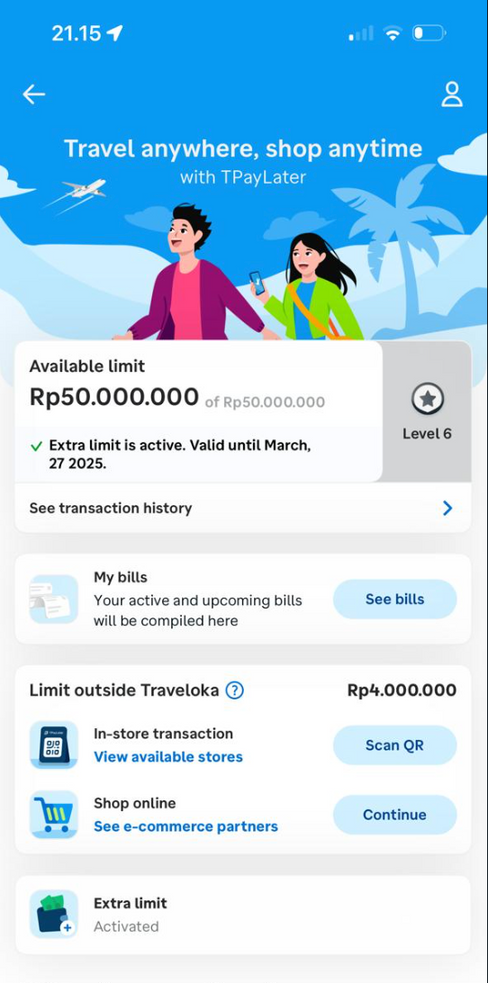
Problem: I noticed that users with limits under Rp3 million had utilized over 70% of their available limit. Normally that reads as a risk signal — the existing model would treat it as a reason to tighten eligibility, not loosen it. But I hypothesized this segment was different: for users with small limits, high utilization might simply mean the limit was too low relative to real need, especially since users tend to want a buffer for larger, less predictable purchases like flights.
Approach: To test that without conflating it with actual credit risk, I worked with the Risk team to segment further — specifically excluding users with a bad NPL history from the eligible pool, so we weren't boosting limits for genuinely risky users, only for ones where high utilization likely reflected unmet demand rather than over-leveraging. We then ran the limit boost as an experiment and evaluated it on net profit contribution — not just growth, and not just NPL — so the decision to scale was based on the full economics rather than one side's metric.
Result: The experiment supported a wider rollout than Risk's original criteria would have allowed, contributing to roughly 20% growth in PayLater penetration without breaching risk limits.
What I'd do differently: Post-launch, we found one sub-segment — users with a previously clean NPL history — saw risk rise once limits increased, showing that a strong-seeming signal doesn't always hold at a higher limit. We excluded that segment from the full rollout and I'd now build that granularity into the initial design rather than catching it after the fact.